History
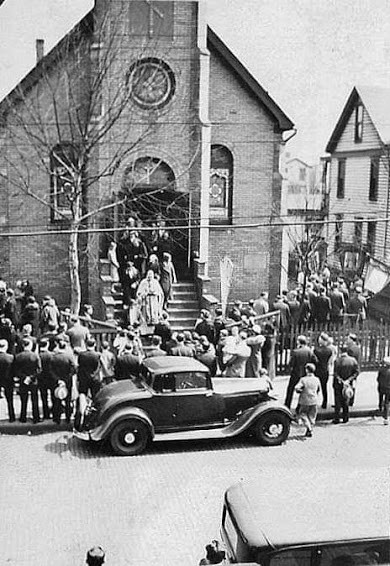 At the turn of the century, many immigrants settled in the small community of Aliquippa along the Ohio River about 25 miles north of Pittsburgh. The iron and steel industry for which it became known had its beginnings during this time. Although there was no Byzantine Catholic Church conveniently located, the faithful made the necessary sacrifices to attend church on Sundays and Holy Days. This meant walking down to the bank of the Ohio River to board a boat to travel to the nearest churches, located in McKees Rocks and Pittsburgh’s South Side.
Transportation improved somewhat with the advent of trains and more frequently scheduled stops. Despite the inconvenience, faithful always managed to carry their Easter baskets to be blessed on Easter Sunday. Distance and time did not deter them from worshiping and keeping their traditions.
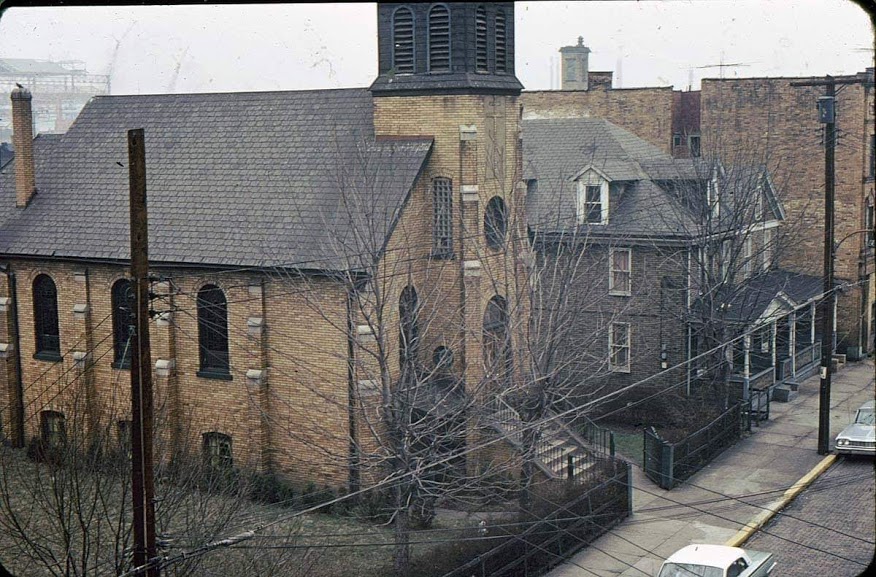 Their desire to have their own church materialized after more families moved into the area. On March 15, 1915, the first Greek Catholic Church of Aliquippa was organized at the home of Andrew Kovacs. Under the leadership of Father Arnold Suba of McKees Rocks, property was purchased. Groundbreaking ceremonies for the church in honor of St. George, the Great Martyr, took place in May of 1916. The church was completed in 1917 and was consecrated on July 4, 1917 by Very Reverend Gabriel Martyak, Apostolic Administrator. Among the additions were church bells in 1927, an icon screen in the late 1930s and stained glass windows in 1945.
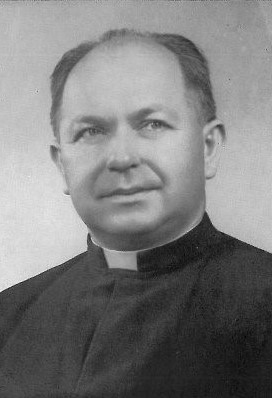
 By 1947, the congregation had grown from 150 to 1,200 people. The church was so crowded during the two Sunday liturgies that a third Liturgy was added. Msgr. Michael A. Simodejka, the pastor, encouraged the people to participate in fund-raising for a new church. By 1962, an adequate sum of money was saved and a nearby 14.6 acre tract of land was purchased. The new St. George Church, rectory and Educational Center were solemnly dedicated during the parish’s Golden Jubilee Year on October 29, 1967 by Rev. Msgr. Edward V. Rosack, Apostolic Administrator.

St. George’s Church complex is dominated by the church itself which has 53-foot towers on either side of the arched front entrance. A corridor connects the Educational-Social Center to the church. In the Center are classrooms, a conference room, a large social hall, and lounges.
St. George the Great Martyr Byzantine Catholic Church celebrated 100 years in 2015.